

Is the PMP® Still Worth It in South Africa?
Yes but the real answer is more nuanced than a simple yes or no.

The Project Management Professional (PMP) still carries weight in South Africa because it is a globally recognised certification that validates a project professional’s ability to manage people, processes, and priorities from the start to finish of a project. PMI (Project Management Institute) positions the PMP as a leading project management credential for experienced professionals, and its requirements reflect that seniority: candidates need both project leadership experience and formal project management education before they can even sit for the exam.

For professionals working in multinational companies, consulting, IT, finance, mining, telecommunications, or roles that sit across multiple countries, the PMP still acts as a strong signal of credibility. It tells employers and clients that you are not only experienced, but also trained in a structured, internationally understood project management framework. In a market where employers often need people who can deliver consistently, manage risk, and communicate across functions, that signal still matters.

But in South Africa, the PMP is not the same thing as local professional registration. That distinction matters. The South African Council for the Project and Construction Management Professions, or SACPCMP, is the statutory body established under the Project and Construction Management Professions Act to regulate project and construction management professions in the public interest. SACPCMP offers professional registration routes such as Pr.CPM and Pr.CM, which are especially relevant in the built environment and infrastructure space.
So, is the PMP still worth it in South Africa? Absolutely, if your career path is shaped by corporate project delivery, regional mobility, or leadership in complex environments. But if you work in construction or infrastructure, the PMP should be viewed as a powerful supplement, not a replacement, for local professional registration. In that space, credentials like Pr.CPM and Pr.CM (Professional Construction Project Manager/Professional Construction Manager) can carry more regulatory and role-specific significance than PMP alone.
The practical takeaway is simple: the PMP still matters, but its value depends on the sector you are in and the kind of career you want to build. It remains a strong investment for South African professionals especially when paired with local registration.
What the PMP Adds: Global Credibility, Leadership, and Career Mobility
The biggest reason the PMP still matters in South Africa is that it gives you something many other credentials do not: global credibility. PMI describes its certifications as industry-recognized and applicable across the globe, which means the PMP is not tied to one country, one sector, or one employer type. For South African professionals, that matters in a labour market where careers are increasingly shaped by multinational employers, cross-border projects, and hybrid delivery teams.
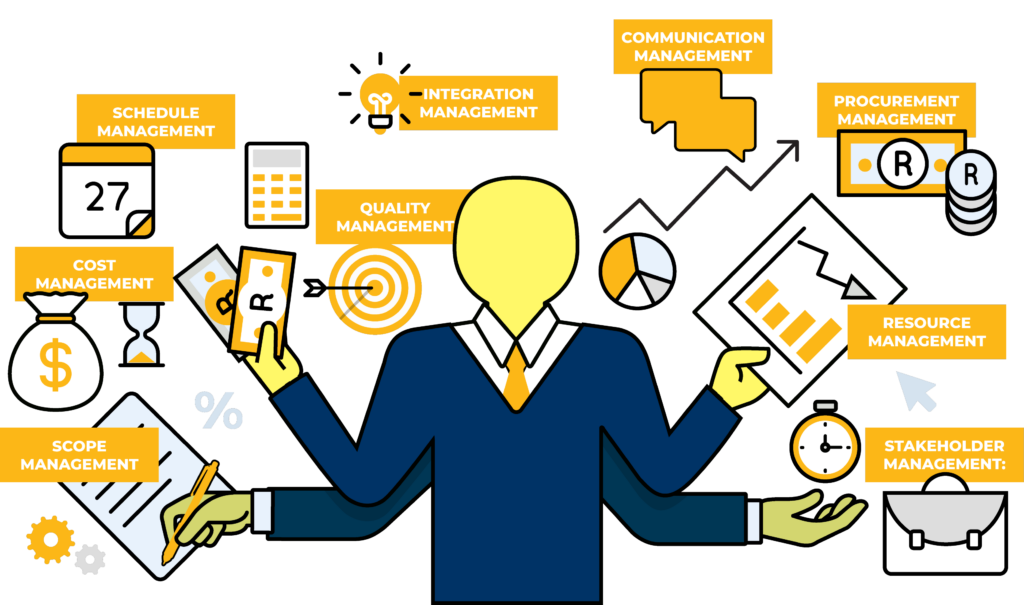
- The PMP is not an entry-level badge; it is a signal that you have already spent meaningful time leading projects and have enough structure behind your experience to operate at a higher level. That translates into stronger positioning for senior project roles, programme-facing work, consulting, and leadership tracks. The PMP helps standardise your profile. It tells recruiters and hiring managers that you understand the language of scope, risk, stakeholders, delivery, governance, and performance.
- There is also a career mobility advantage. Because the PMP is international, it can support professionals who want to work beyond South Africa, move between sectors, or compete for roles in organisations that benchmark talent against global standards. Even when local professional registrations exist: it does not replace experience, but it can make that experience easier to recognise elsewhere.
- An often overlooked benefit is maintenance discipline. PMI requires ongoing professional development to maintain certification, which reinforces continuous learning rather than a once-off exam pass. That matters in a profession that keeps evolving through agile methods, portfolio thinking, and strategic delivery expectations.
Other Credentials That Matter
Here is Section 4 written in full, with a practical list of non-PMI certifications that are strongly relevant to the kind of South African audience Classic Seminars usually attracts.
4. Other Credentials That Matter: When Local Registration or Sector-Specific Routes Win
If you work in South Africa and your role sits somewhere between project delivery, operations, business change, or technical implementation, the certification that matters most is often the one that best matches your industry rather than the one with the biggest international brand name. South African job listings repeatedly show demand for project managers, PMO professionals, and delivery leads who have additional credentials alongside practical experience. In many cases, employers describe these certifications as “advantageous,” “beneficial,” or part of the required project management toolkit.
- NEC / FIDIC Contract Management Certifications
Widely used in infrastructure and international construction contracts. Critical for contract administrators, site managers, and project engineers. - GCC (General Conditions of Contract) Training
Highly relevant in South African public sector and municipal infrastructure projects. - Engineering Council of South Africa (ECSA) Professional Registration – Pr Eng / Pr Tech Eng
A core professional designation for engineers working in regulated technical environments. - Six Sigma (Green Belt / Black Belt)
Strongly valued in manufacturing, mining, logistics, and process optimisation environments. - PRINCE2 (Foundation & Practitioner)
Extremely common in government, IT services, and structured project environments due to its process-driven framework. - Scrum Master Certifications (CSM / PSM)
One of the most searched certifications in South Africa’s agile and software delivery job market. - ITIL 4 Foundation
Strongly valued in IT service management roles, particularly in enterprise IT and managed service environments. - AWS / Azure Cloud Certifications
Increasingly important for project managers working in digital transformation and cloud migration projects. - Lean Management Certifications
Focused on efficiency, process improvement, and operational excellence. - Change Management Certifications (Prosci / CCMP)
Highly valued for transformation programmes in banking, telecoms, and government. - Business Analysis Certifications (IIBA – ECBA / CCBA / CBAP)
Essential for hybrid roles where project management overlaps with requirements and systems analysis.

